
Subha
Title
```Tasbih Digital The Free Online Tasbih Counter for Your Daily Dhikr
There is a sound that stays with you long after your hands stop moving. The soft click of one bead sliding against another. The quiet rhythm of a heart repeating the words it loves most — SubhanAllah, Alhamdulillah, Allahu Akbar. For centuries, that sound belonged to a string of wooden or stone beads called a tasbih, or misbaha. Today, it belongs to your phone screen too.
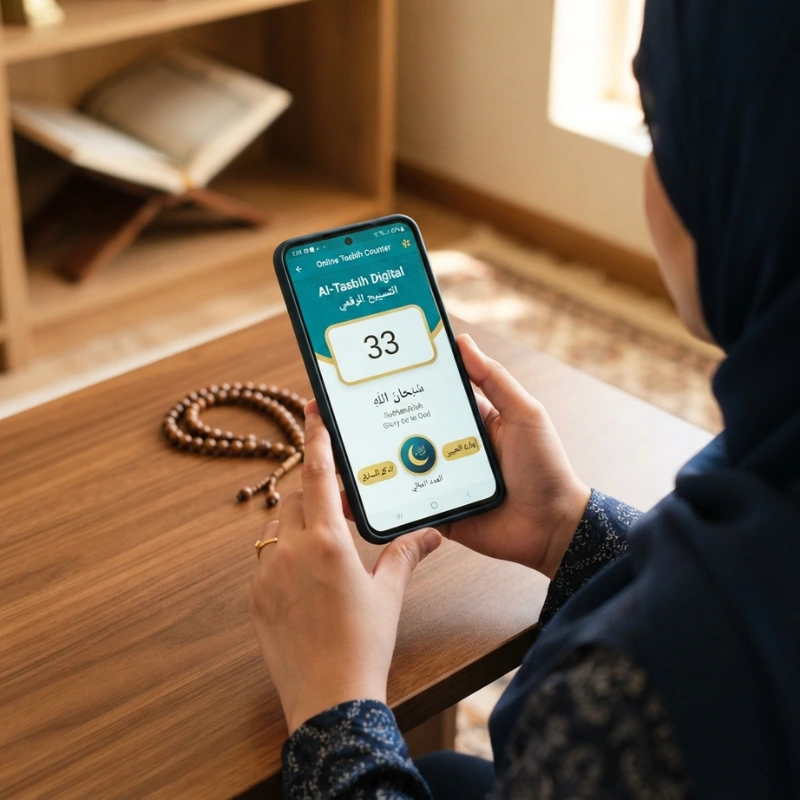
Tasbih Digital is a free online tasbih counter built for exactly this moment — the moment after Fajr when your hands are empty but your heart wants to count, the moment on a train or in an office chair when your physical beads are sitting at home on the shelf. It is a digital tasbih, a dhikr counter, a zikr counter, a tasbeeh counter online, a bead counter for the modern hand — call it tasbih, tasbeeh, or tesbih the way your grandmother did in her language, it does the same one thing extremely well: it counts your remembrance of Allah, quietly, accurately, and privately, with nothing standing between you and your dhikr.
No account. No download. No app store. No sign up, no subscription — just a free tasbih app that opens straight in your browser, completely ad-free, and ready the moment you tap in. Just open the page, and start.
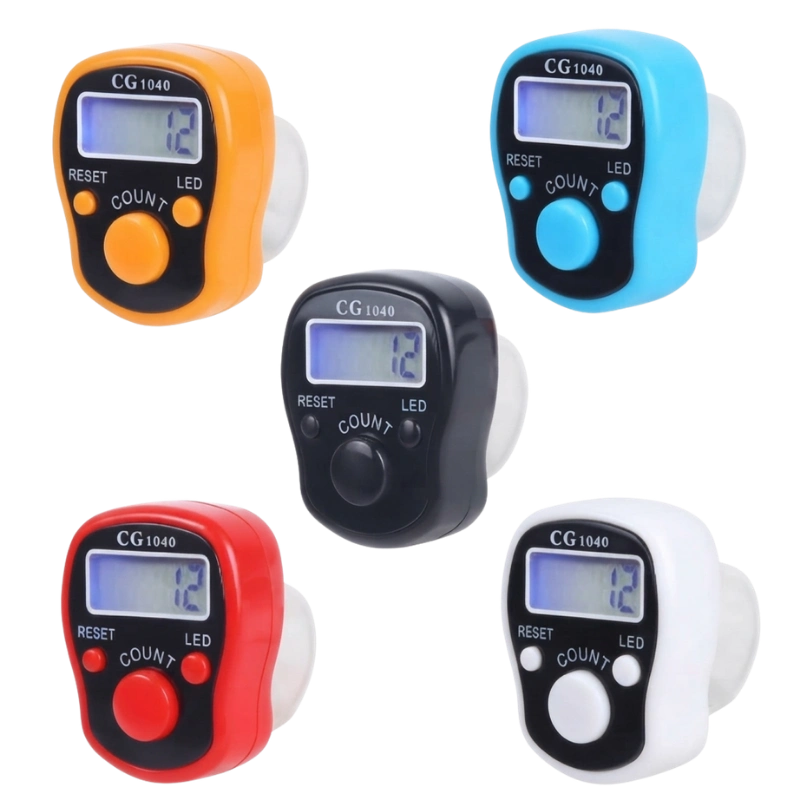
What Is a Tasbih, and Why Does a Digital One Matter?
A tasbih also written as tasbeeh, tespih, or called a misbaha is a string of prayer beads used by Muslims to keep count while reciting dhikr (remembrance of Allah). Traditionally it has 33, 99, or 100 beads, often with a slightly larger “marker” bead after every 11 or 33 beads to help the fingers know where they are without needing to look down.
The purpose was never the beads themselves. The beads exist so the mind doesn’t have to split its attention between remembering Allah and remembering the number. That is the entire philosophy behind Tasbih Digital as well. A digital misbaha should disappear into the background the same way a physical one does you should feel the bead ring, hear the click, and lose yourself in the words, not in the interface.
Whether you typed tasbih beads online, digital misbaha, zikr counter, or simply tasbih app into the search bar, you’ve landed on the same need a way to count dhikr without carrying physical beads everywhere you go.
Why People Search for an Online Tasbih Counter
| Reason People Switch to a Digital Tasbih | What It Solves |
|---|---|
| Forgot their physical tasbih at home or while travelling | Your phone is almost always with you |
| Want to count silently during a meeting, class, or commute | A single tap replaces moving beads |
| Doing dhikr after a prayer at the mosque, without carrying beads | Instant access, no object to carry |
| Want to track daily consistency, not just one session | Streaks and daily totals, which beads cannot show |
| Teaching children the meaning of each dhikr | On-screen Arabic, transliteration, and meaning together |
| Want a private habit tracker without social features | No account, no public profile, no leaderboard |
A physical tasbih tells you how many. A well-built digital one tells you how many, how often, and how consistently — while still keeping the same unhurried, tactile feeling.
How the Tasbih Digital Counter Works
Using Tasbih Digital takes less time to learn than it took you to read this sentence.
-
Open the page
No sign-up screen, no email request, no "continue as guest" button — because there is no account to begin with.
-
Tap the bead ring or the gold "Tap" button
Each tap adds one to your count, plays a soft click, and (on supported phones) gives a light vibration.
-
Watch the beads light up
The counter is built around a 33-bead ring, just like a traditional tasbih, so every full turn of the ring is one complete round — the same rhythm your hands already know.
-
Choose your dhikr
Pick from SubhanAllah, Alhamdulillah, Allahu Akbar, La ilaha illallah, Astaghfirullah, La hawla wala quwwata illa billah, Salawat, or type your own custom dhikr or custom dua.
-
Set a target
33, 99, 100, 1000, or any custom number you like.
-
Let it save itself
This is auto save, built quietly into the page: every tap is stored automatically on your own device. Close the tab, lock your phone, come back tomorrow — your count is exactly where you left it, even offline, since nothing needs to reload from a server.
Keyboard and One-Handed Use
For desktop users, or anyone who prefers not to look at the screen while counting:
| Key | Action |
|---|---|
| Space | Add one count |
| ↓ (Arrow Down) | Remove one count (undo a mistake) |
| R | Reset the current session |
This matters more than it sounds. Many tally counter tools force you to keep your eyes on a small button. A dhikr counter should let your eyes stay closed if they want to.
Tip for a distraction-free session: open Tasbih Digital in your browser’s fullscreen mode (press F11 on desktop, or use “Add to Home Screen” on mobile) for a borderless, app-like view — no address bar, no tabs, just the bead ring and your dhikr.
Every Dhikr You Can Count, With Its Meaning and Virtue
One thing that separates a genuinely useful dhikr counter from a generic click counter repackaged with an Islamic theme is context. A number alone means little. The words behind the number mean everything. That's why Tasbih Digital shows the Arabic, the transliteration, and the meaning of each dhikr right above the counter — not hidden in a menu three taps away.
| Dhikr (Arabic) | Transliteration | Meaning | Commonly Recited |
|---|---|---|---|
| سُبْحَانَ اللَّه | SubhanAllah | Glory be to Allah | 33 times after each prayer |
| الْحَمْدُ لِلَّه | Alhamdulillah | All praise is due to Allah | 33 times after each prayer |
| اللَّهُ أَكْبَر | Allahu Akbar | Allah is the Greatest | 33–34 times after each prayer |
| لَا إِلَٰهَ إِلَّا اللَّه | La ilaha illallah | There is no god but Allah | As often as possible, no fixed limit |
| أَسْتَغْفِرُ اللَّه | Astaghfirullah | I seek forgiveness from Allah | 3–100 times daily |
| لَا حَوْلَ وَلَا قُوَّةَ إِلَّا بِاللَّه | La hawla wala quwwata illa billah | There is no power except with Allah | Whenever seeking strength or ease |
| اللَّهُمَّ صَلِّ عَلَى مُحَمَّد | Allahumma salli ala Muhammad | O Allah, send blessings upon Muhammad ﷺ | Especially on Fridays |
This is the same set of phrases counted on a traditional misbaha, the same set you’ll find people searching for under tasbeeh counter, zikr counter, or simply dhikr app. Tasbih Digital brings them together in one clean, tap-anywhere interface, with room to add your own custom dhikr or custom dua if the seven presets don’t cover what’s on your heart that day.
The Classic 33-33-33 Routine
Ask almost any practising Muslim what they recite after a prayer, and you'll hear some version of this: SubhanAllah thirty-three times, Alhamdulillah thirty-three times, Allahu Akbar thirty-three times — ninety-nine in total, completed to one hundred with a final declaration of faith. It's a routine passed down for over a thousand years, and it's the exact reason the bead ring in Tasbih Digital has thirty-three beads. One full turn of the ring, one complete set. It's a small design decision, but it's the kind of detail that tells you this tool was built by someone who actually uses a tasbih — not someone who simply Googled what one looks like.
Features That Go Beyond a Basic Tap Counter
Search for "tasbih counter online" and you'll find dozens of results. Most of them do one thing: they add one number when you tap a button. That's useful, but it's the floor, not the ceiling. Here's what a genuinely complete digital tasbih should offer — and what Tasbih Digital gives you, without locking any of it behind a paywall.
Multiple Sessions, Side by Side
Real dhikr routines are rarely just one number. A session called "Morning Dhikr" and another called "After Fajr" and a third for "Istighfar Before Sleep" can all exist at the same time, each with its own count and its own target. Switch between them with a single tap. Delete the ones you no longer need. This turns the tool from a simple tally counter into something closer to a proper dhikr tracker.
Daily Streaks and All-Time Totals
Consistency is the entire point of dhikr — a small amount done every day outweighs a large amount done once. Tasbih Digital quietly counts your day streak, your today's total, and your all-time total, so you can see, in numbers, that the habit is actually holding. This is a feature almost no free online tasbih counter offers without an account; here, it's built in from the first tap.
Custom and Preset Targets
Choose the traditional 33, the well-known 99, a round 100, or an ambitious 1000 — or type in any custom number you're working toward. When you reach it, the ring gently pulses gold and your phone gives a short, distinct vibration. Small feedback, but it matters when your eyes are closed.
A Downloadable Summary Card
Tap once, and Tasbih Digital generates a shareable image your totals, your streak, and a breakdown of every dhikr you've recited as a clean, printable card. No other tasbeeh counter online currently offers this as a free, no-login feature. Keep it for yourself as a record, or share it privately with a friend or family member you're encouraging to build the same habit.
Fully Bilingual English and Bahasa Indonesia
Tasbih Digital automatically detects your device language and switches between English and Bahasa Indonesia, with a single tap to toggle manually. For the millions of Indonesian-speaking Muslims searching for tasbih digital and hitungan zikir online, this isn't a translated afterthought — it's a first-class experience in their own language.
Light Theme and Dark Mode
A soft ivory-and-gold light theme for daytime use, and a deep green-and-gold dark mode that's gentle on the eyes during late-night or pre-dawn dhikr. One tap on the moon or sun icon switches instantly between the two.
Sound, Vibration, and Silence Your Choice
Every tap can play a soft click, trigger a light vibration, both, or neither. Toggle each independently from the top corner, whether you're in a quiet office, a mosque, or lying in bed after Isha.
Completely Free, No Ads, No Sign Up
Tasbih Digital is, and will stay, a free tasbih counter — not a free trial, not a limited version. There are no ads interrupting your dhikr, no subscription tier hiding streaks or sessions behind a paywall, and no sign up screen standing between you and your first tap. Open it, use it, close it — that's the whole transaction.
Feature Comparison at a Glance
| Feature | Basic Tap Counters | Tasbih Digital |
|---|---|---|
| Tap to count | ✅ | ✅ |
| Auto save on device | Sometimes | ✅ |
| Multiple named sessions | Rarely | ✅ |
| Daily streak tracking | Rarely, often paid | ✅ Free |
| Custom + preset targets | Sometimes | ✅ |
| Meaning & Arabic shown live | Rarely | ✅ |
| Downloadable summary image | Almost never | ✅ |
| Sign up required | Sometimes | ❌ Never |
| Bilingual (EN / Indonesian) | Rarely | ✅ |
| Ads | Often | ❌ None — fully ad-free |
| Works after first load | Rarely | ✅ Offline-friendly, nothing re-sent |
| Dark mode / fullscreen-friendly | Sometimes | ✅ Both |
Built for Privacy Because Dhikr Is Personal
There's something almost contradictory about counting a private act of worship on a public platform, and Tasbih Digital was built with that tension in mind. Your dhikr is between you and Allah. The counting tool should not turn that into data.
- Nothing is sent to a server. Every count, every session, every streak lives only in your browser's local storage, on your own device.
- No account, no email, no phone number. There is nothing to sign up for, so there is nothing that can be leaked, sold, or hacked.
- No analytics tracking your taps. We don't know how many times you recited Astaghfirullah today, and we never will — only you do.
- Works the same for everyone. No premium tier holding features hostage, no "unlock with Pro" screen interrupting your dhikr the way it does on some competing apps.
This single design decision — keeping everything local — is why the footer of the tool reads: “Counts save automatically on this device. Nothing is sent anywhere — your dhikr stays private.” It isn’t a marketing line. It’s a description of how the code actually works.
Who Tasbih Digital Is Built For
- Daily worshippers who recite the 33-33-33 routine after every prayer and want a faster, more portable way to keep count than carrying a physical misbaha.
- Travellers and commuters who left their prayer beads at home but still want to recite dhikr on a bus, plane, or in an airport lounge.
- New Muslims and learners who don't yet have all seven dhikr phrases memorised and want the Arabic, transliteration, and meaning displayed together while they practice.
- Parents and teachers introducing children to the concept of dhikr in a visual, tap-friendly way.
- Anyone building a consistency habit, using this dhikr tracker's daily streak and all-time total the same way a fitness app uses a step count — except the goal here is remembrance, not exercise.
A Short History of the Tasbih (Misbaha)
Understanding where a tool comes from often explains why it looks the way it does. The tasbih is not a modern invention. Historical accounts describe the Prophet Muhammad ﷺ and his companions counting dhikr using small stones, date pits, and knots tied into string long before beads strung on a cord became common. Over the following centuries, as trade routes carried ideas across the Muslim world, the misbaha took the form most people recognise today: a loop of 33, 99, or 100 beads, usually made from wood, stone, amber, or pressed rose petals, with a distinctive tassel marking the start and end of the loop. The same object travelled under many names along the way tasbih in Arabic and Urdu, tasbeeh in South Asia, tesbih in Turkish, sebha in parts of the Levant different words for one bead counter, one shared purpose.
The number 99 is not arbitrary. It corresponds to the 99 Names of Allah, known as Asma-ul-Husna, and many people use a 99-bead tasbih specifically to recite these names, one bead per name, one full loop per complete recitation. A 33-bead tasbih, by contrast, is built for repetition three full loops covering the 33-33-33 routine after each of the five daily prayers.
Digital tools like Tasbih Digital don’t erase this history; they extend it. The bead ring on screen, the marker beads at the 11th and 22nd position, the tassel graphic at either end every visual choice mirrors a physical object that has existed, in one form or another, for well over a thousand years. The medium changed from stone to glass, and now to glass screens. The practice underneath it has not changed at all.
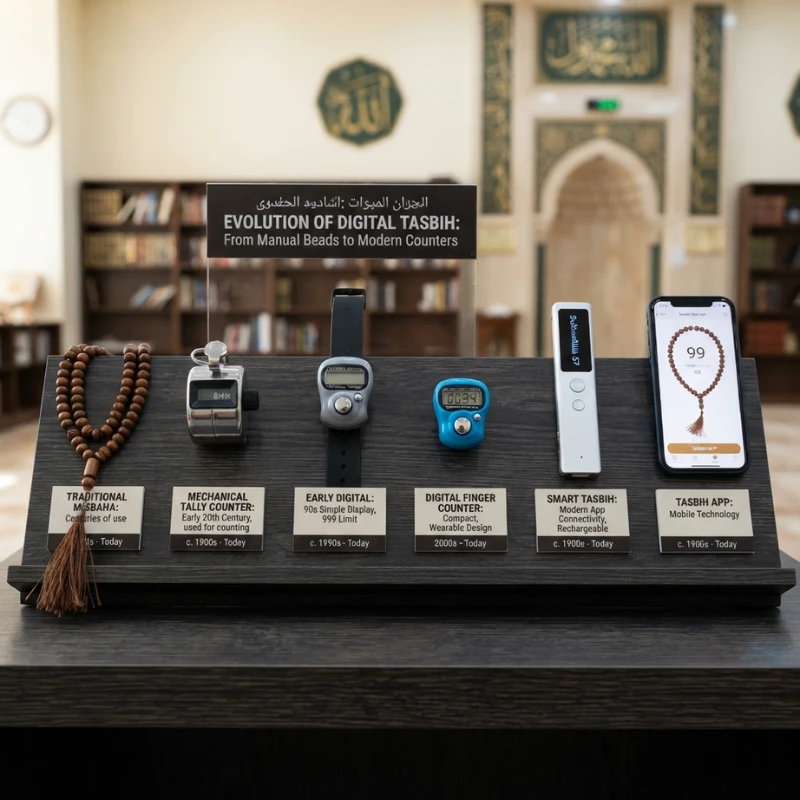
Manual Beads or a Digital Tasbih Which Should You Use?
This isn't really a competition, and Tasbih Digital was never built to replace the physical tasbih sitting on your shelf or hanging from your car mirror. It was built to sit alongside it, for the moments when carrying beads simply isn't practical.
| Situation | Better Choice |
|---|---|
| At home, in a relaxed setting, after Maghrib | Physical tasbih, for the tactile feel |
| Commuting on a bus, train, or in traffic | Digital tasbih — your phone is already in your hand |
| Travelling light, beads left behind | Online tasbih counter, accessible from any browser |
| Wanting to track a daily streak over weeks | Digital tasbih — beads can't remember yesterday |
| Teaching a child the meaning behind each dhikr | Digital tasbih — Arabic and meaning shown on screen |
| A quiet moment with no distractions | Either — whichever brings more presence of heart |
The honest answer most long-time users give is that they use both, depending on where they are and what the moment calls for. A tasbih in the pocket for the mosque and the prayer mat. A digital tasbih counter open in a browser tab for the office, the airport, and the in-between minutes of an ordinary day.
Frequently Asked Questions (FAQ)
Is Tasbih Digital really free?
Yes, completely. There is no premium tier, no locked feature, and no advertisement interrupting your count.
Do I need to create an account to use the tasbih counter?
No. Tasbih Digital has no sign-up, login, or account of any kind. Open the page and start counting immediately.
Where is my dhikr count saved?
Directly on your own device, inside your browser. It is never uploaded to a server, which means it’s also never shared, sold, or seen by anyone but you.
Will my count sync between my phone and my computer?
No, and this is intentional — because syncing would require sending your data somewhere outside your device. If you’d like a personal record across devices, use the downloadable summary image feature to keep a copy of your progress.
Can I count more than one dhikr at the same time?
Yes. Create separate sessions for example, one for SubhanAllah after Fajr and another for Istighfar before bed and switch between them freely.
What happens when I reach my target?
The bead ring pulses gently, your device vibrates briefly (if enabled), and a short confirmation message appears. It repeats every time you reach a new multiple of your target.
Does resetting the counter erase my streak or total?
No. Reset only sets the current session’s count back to zero. Your daily total, all-time total, and day streak are calculated separately and remain untouched.
Can I add my own dhikr or a personal dua?
Yes. Select “Custom…” in the dhikr dropdown and type in your own transliteration.
Is this available in Bahasa Indonesia?
Yes. Tasbih Digital automatically detects your browser language and offers a full Indonesian interface, switchable at any time with the language toggle at the top of the page.
Why does the counting ring have exactly 33 beads?
Because it mirrors the most common tasbih routine in Islamic practice — SubhanAllah, Alhamdulillah, and Allahu Akbar, each recited 33 times after prayer. One full turn of the digital ring equals one complete traditional round.
A Small Tool for a Quiet, Enormous Habit
There is nothing flashy about counting to thirty-three. It will never trend, never go viral, never need a marketing campaign to explain why it matters. And yet it is one of the most repeated acts of devotion in the world — whispered in mosques, in kitchens, in hospital waiting rooms, in the backseats of cars stuck in traffic, by people who have never met each other but are, in that exact moment, saying the exact same words.
Tasbih Digital doesn't try to reinvent that. It simply tries to get out of its way — to be the modern, pocket-sized version of the string of beads your grandfather kept in his pocket, doing the one job it needs to do: counting your remembrance, accurately, privately, and for free, for as long as you need it.
Open the counter above. Choose your dhikr. Tap once. Begin.